
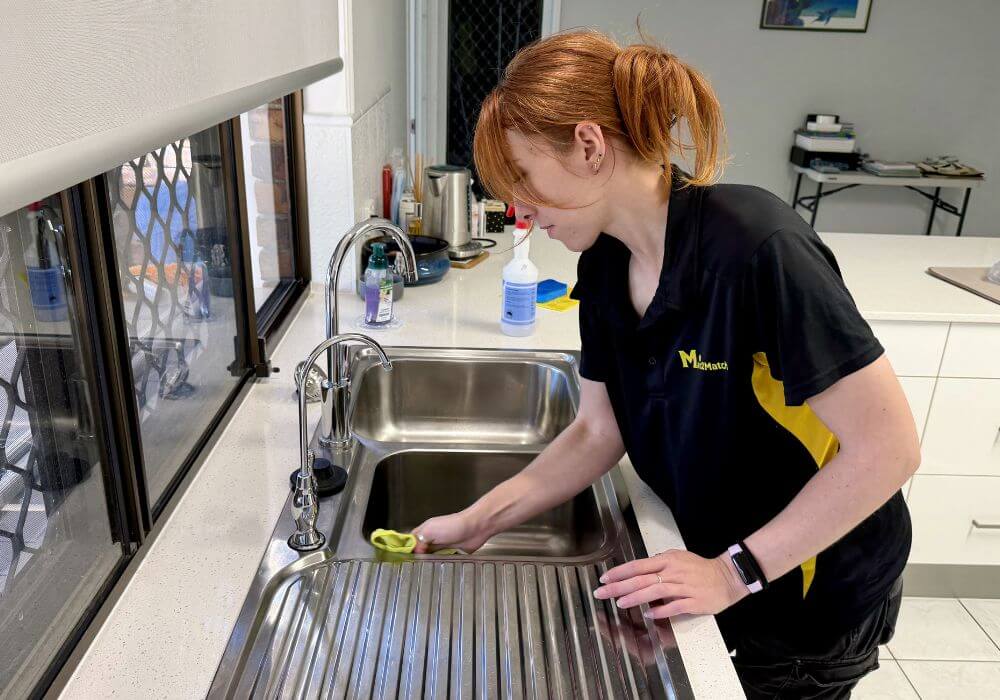
Stained kitchen sinks often need gentler cleaning than people expect. Food residue, mineral deposits, tea, coffee, grease, and metal marks can look similar while responding differently to cleaners. Start mild, identify the sink material, and treat stubborn areas gradually. That approach can restore a cleaner finish without exchanging a stain for scratches or discoloration.
Identify the Sink Surface First
Stainless steel, porcelain, composite granite, fireclay, copper, and natural stone don’t share identical care requirements. A cleaner that works well on one may dull or damage another.
Check manufacturer guidance if you know the sink model. Otherwise, start with warm water, dish soap, and a soft sponge.
Look at the Type of Mark
Greasy film often feels slick. Mineral buildup tends to look chalky, while coffee and food discoloration may appear as localized brown or yellow staining.
Begin With Mild Cleaning
Rinse loose debris away and wash the basin with warm water and a small amount of dish soap. Work with a microfiber cloth or nonabrasive sponge.
People comparing kitchen design examples may notice that glossy sinks show water spots and smudges more easily than some matte finishes. Appearance changes maintenance expectations, but it doesn’t justify using harsher cleaners.
| Sink Issue | Gentle Starting Point | Avoid Initially |
|---|---|---|
| Greasy film | Dish soap | Abrasive powder |
| Water spots | Soft damp cloth | Steel wool |
| Food stain | Mild surface-safe cleaner | Hard scraping |
| Dull appearance | Thorough rinse and dry | Mixing chemicals |
Target Stubborn Areas Gradually
If ordinary washing leaves a stain, use a cleaner confirmed safe for the sink material. Apply it only where needed rather than coating the whole basin.
Decorating and care ideas from kitchen styling resources can be helpful when planning a sink area that stays tidy. Daily maintenance still matters more than appearance: rinsing residue soon after use prevents many stains from becoming difficult.
Give Cleaner Time to Work
Gentle contact time can be more effective than heavy pressure. Follow product instructions, then rinse thoroughly so cleaner residue doesn’t create a new dull film.
Restore the Finished Look
After cleaning, rinse the basin completely and dry it with a soft cloth. Drying is especially useful on surfaces where mineral-rich water leaves visible spots.
Household inspiration from home finish guides may help when comparing future kitchen materials. For an existing sink, protecting its original finish should take priority over chasing a highly polished appearance with abrasive tools.
Common Cleaning Mistakes to Avoid
Mixing household chemicals is an unnecessary risk and may produce dangerous fumes. Use one appropriate cleaning method at a time, rinse thoroughly, and never improvise chemical combinations.
Abrasive pads are another common problem. They can leave fine scratches that make future dirt easier to notice. Don’t assume a stronger scrub is the answer simply because a mark survived the first cleaning attempt.
Frequently Asked Questions
Can baking soda clean a stained kitchen sink?
It can be suitable for some sink materials, but its mild abrasive action isn’t ideal for every finish. Check the manufacturer’s recommendations and test gently before treating a large visible area.
Why does my stainless steel sink look cloudy?
Mineral deposits, soap residue, grease, and incomplete rinsing can all create a cloudy appearance. A thorough wash followed by rinsing and drying often helps identify whether deeper treatment is actually needed.
How do I prevent sink stains from returning?
Rinse food and drink residue promptly, avoid leaving wet metal objects in the basin, clean spills before they dry, and wipe the sink dry when water spotting is a recurring problem.
Protect the Finish While You Clean
A clean sink shouldn’t come at the cost of permanent surface damage. Begin with mild soap, match stronger treatment to the sink material, and use time rather than excessive force against stubborn marks. Once the basin is clean, regular rinsing and drying can preserve the result with far less effort than repeated deep scrubbing.
Related Posts

Weak Online Privacy – Protect Data With Better Settings

Consumer Contract Problems – Read Fine Print Before Signing