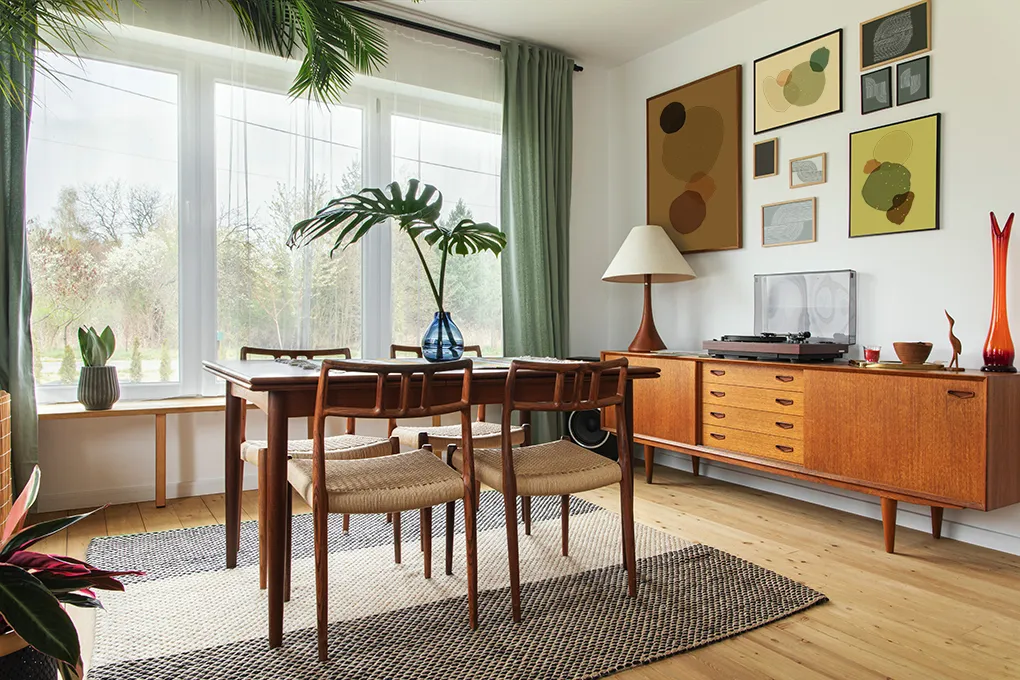
An empty dining wall can make an otherwise finished room feel incomplete, yet filling every open surface creates a different problem. Empty dining walls usually need one clear visual idea rather than a collection of unrelated decorations. Scale, spacing, and the relationship to the dining table matter more than the total number of pieces displayed.
Choose One Visual Anchor First
Start with the wall that receives the most attention from the dining table or adjoining room. That surface can usually handle the strongest decorative element.
A large artwork, mirror, narrow console, or grouped arrangement can provide enough structure on its own. Before adding smaller objects, step back and decide whether the wall already feels balanced.
Examples of wall styling ideas can help illustrate how a single substantial feature often looks more deliberate than several undersized decorations scattered across the same surface.
Match the Scale to the Furniture Below
Wall decor should have some visual relationship to a buffet, console, bench, or dining table nearby. Tiny artwork above a long sideboard often looks stranded because the proportions don’t communicate with each other.
Add Function Where the Room Needs It
Decorating an empty wall doesn’t require hanging art. A shallow storage cabinet, serving console, or narrow shelving system may solve a practical problem while giving the wall more presence.
For rooms that need warmth instead of storage, dining room styling can provide a broader visual reference for balancing textiles, lighting, artwork, and furniture without crowding the walls.
| Wall Option | Best Use | Main Risk |
|---|---|---|
| Large artwork | Strong focal point | Hanging too high |
| Mirror | Adds visual depth | Reflecting clutter |
| Console | Storage and display | Blocking circulation |
| Gallery grouping | Personal character | Excessive small pieces |
Use Negative Space as Part of the Design
Decor isn’t only about what you add. The empty area surrounding an artwork or cabinet helps define its importance.
A wall with one strong piece and generous space around it often feels calmer than one covered from corner to corner. Similar principles appear in exterior entertaining ideas, where defined focal zones tend to work better when open space separates them.
Leave enough room around doors, switches, windows, and architectural details so the wall doesn’t feel squeezed.
Where Dining Wall Decorating Goes Wrong
The easiest mistake is buying decorations individually without considering the final composition. Each piece may look attractive, yet the collection can become visually noisy once everything is installed together.
Another problem is repeating the same decorative formula on every wall. A large artwork, gallery wall, mirror, shelves, and decorative clock competing within one dining room rarely need equal attention.
Choose a hierarchy. One wall can lead, another can support, and some can remain mostly empty.
Frequently Asked Questions
What should I put on a large blank dining room wall?
Start with one appropriately scaled element such as large artwork, a mirror, a console, or a coordinated grouping. The best option depends on whether the room needs more visual interest, storage, reflection, or personal character.
How high should dining room wall art be hung?
Artwork generally looks better when positioned for comfortable eye-level viewing rather than pushed close to the ceiling. Furniture beneath the artwork should also influence placement so the two elements appear visually connected.
Can I leave one dining room wall completely empty?
Yes. An empty wall can provide useful visual relief when other areas already contain artwork, storage, windows, or strong architectural features. Blank space looks intentional when the rest of the room has a clear design hierarchy.
Give the Wall One Clear Job
Decide what the empty wall needs to accomplish before shopping for decorations. It might need a focal point, extra storage, stronger proportion, or nothing more than one quiet piece of art. Once that job is clear, stop adding objects when the wall feels balanced. Restraint often creates more character than another layer of accessories.
Related Posts
Best Living Room Styles for Melbourne Apartments
4 Signs You Need to Contact a Locksmith