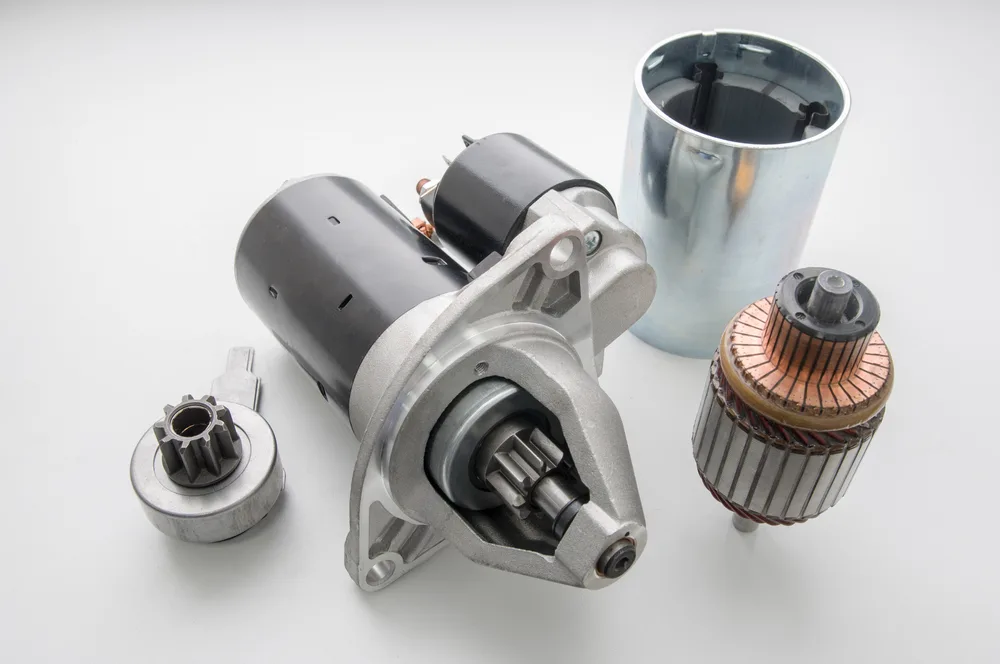
A vehicle that clicks but doesn’t crank may have a starter relay problem, yet the relay is only one part of the starting circuit. Battery condition, cable connections, ignition switches, control modules, neutral-safety switches, and the starter itself can cause similar behavior. Circuit testing helps separate them before expensive components are replaced.
Understand What the Starter Relay Does
The relay allows a relatively small control signal to switch the higher-current side of the starting system. When you turn the key or press the start button, the vehicle commands the relay as part of the crank sequence.
A relay that fails internally may not pass the required electrical command. But a perfectly good relay can also remain inactive because the control side isn’t receiving power or ground.
Before handling starter wiring, switch the ignition off and disconnect the battery when the service procedure requires it. Starter circuits carry substantial current, so accidental short circuits can cause damage or injury.
Check the Battery and Main Connections First
A weak battery often creates rapid clicking, slow cranking, or complete failure to crank. Testing battery condition and inspecting the main terminals should come before condemning the starter relay.
Drivers consulting general vehicle-system guides should remember that clean-looking terminals can still have resistance between mating surfaces. Loose battery cables and damaged ground connections deserve close inspection.
Headlights remaining bright doesn’t prove the battery can support starter current. Cranking places a much heavier demand on the electrical system.
Test the Relay Control and Load Sides
A relay has both a control circuit and a switched circuit. Diagnosis should establish whether the relay is being commanded and whether it passes the appropriate signal when activated.
Broader automotive troubleshooting references can explain electrical terminology, but terminal assignments differ between relay designs. Use the vehicle’s wiring diagram rather than assuming pin positions.
| Test Result | Likely Direction | What to Check |
|---|---|---|
| No relay command | Control-side fault | Switches, modules, wiring |
| Relay clicks, no crank | Load-side issue | Cables and starter |
| Rapid clicking | Low system voltage | Battery and connections |
| Intermittent starting | Connection/relay fault | Terminals and relay |
Where an identical approved relay is used elsewhere in the vehicle, a swap test may sometimes help, but only when the specifications and terminal configuration truly match.
Don’t Ignore Interlocks and Control Inputs
Modern vehicles may prevent cranking unless several conditions are satisfied. Park/neutral position, brake or clutch input, immobilizer authorization, and control-module communication can all influence starter operation.
While reviewing engine electrical topics, avoid reducing every no-crank complaint to the starter motor. If the relay never receives a control command, replacing the motor won’t correct the upstream problem.
Trying to start an automatic-transmission vehicle in both Park and Neutral can sometimes expose a range-switch issue. That observation is diagnostic information, not proof by itself.
Where Parts-Swapping Goes Wrong
A starter motor can be costly and difficult to access, making unnecessary replacement frustrating. Hearing a single click near the relay box doesn’t prove the starter has failed, and hearing no click doesn’t prove the relay is bad.
Electrical diagnosis works better when the circuit is divided into stages: battery supply, control request, relay operation, cable delivery, and starter response. Determine where the command stops. That approach replaces guesswork with evidence.
Frequently Asked Questions
Can a starter relay work intermittently?
Yes. Internal contact wear, heat, vibration, or poor terminal contact can produce intermittent operation. Wiring and battery connection problems can behave similarly, so testing during the failure is especially useful.
Does one click mean the starter is bad?
Not necessarily. A single click may indicate that a relay or starter solenoid is operating, but insufficient battery power, cable resistance, faulty contacts, or a starter problem can still prevent cranking.
Can a bad neutral safety switch stop the starter relay?
On many vehicles, the transmission-range or neutral-safety circuit is part of the starting authorization system. A fault there may prevent a crank command even when the relay itself is functioning properly.
Find Where the Crank Signal Stops
Test the battery and connections first, then determine whether the starter relay receives and passes its command. Continue through the circuit until the missing voltage, ground, or mechanical response is identified. Replacing the starter should follow evidence that the motor or solenoid is actually responsible.
Related Posts
How a Professional Truck Repair Shop Can Keep Your Truck Running Smoothly

Salt Damage Risks – Wash Undercarriage After Winter Roads