
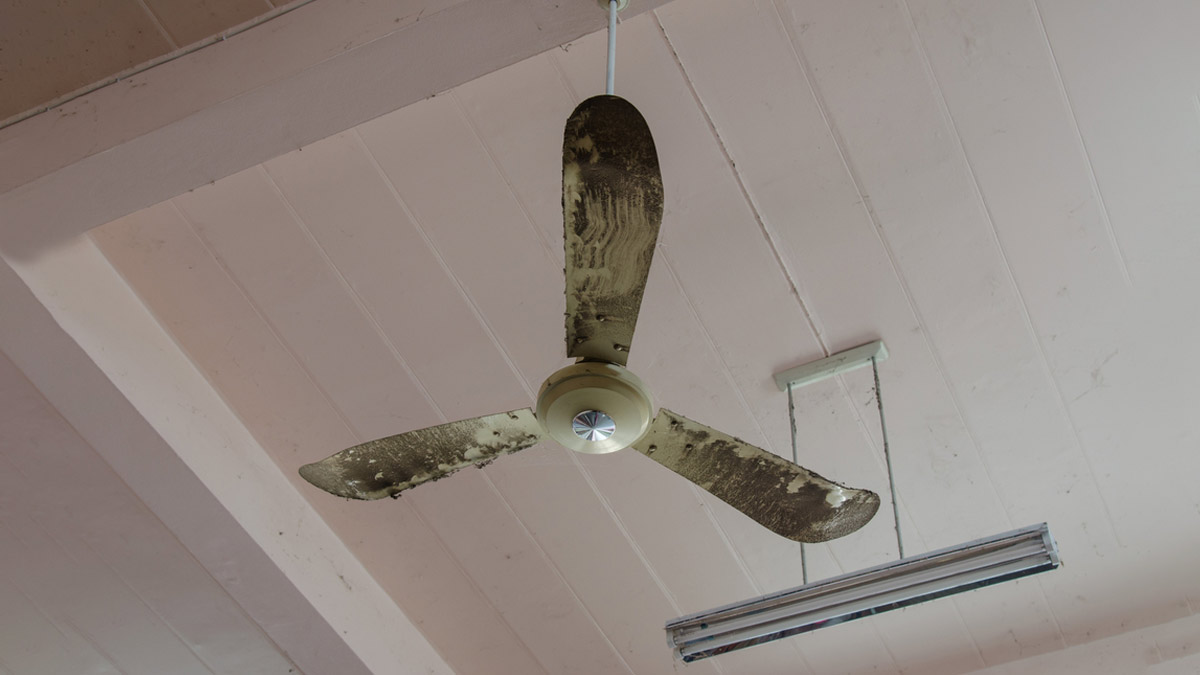
Dirty ceiling fans can hold more dust than they appear to from floor level. Once the fan starts spinning, some of that buildup can loosen and settle on furniture, bedding, and surrounding surfaces.
The cleanest approach is to trap dust rather than sweep it into the room. Turn the fan off completely, use stable access, and work on one blade at a time.
Prepare the Area Before Cleaning
Switch off the fan and wait until the blades stop moving. If the fan has a wall switch, leave it off while you work.
Move fragile items from underneath the fan. A drop cloth or old sheet can catch small particles that escape during cleaning, especially when the blades haven’t been cleaned for months.
People comparing household maintenance methods may come across independent online topics, but basic physical precautions matter more than complicated cleaning tricks.
Use a Pillowcase to Trap Loose Dust
An old pillowcase is useful because it surrounds much of the blade. Carefully slide the case over a blade, hold the fabric against its top and bottom surfaces, and pull it backward.
Loose dust falls inside the pillowcase instead of directly onto the floor. Repeat the process with every blade.
Afterward, empty the collected dust outdoors or into a trash container carefully. Wash the pillowcase separately if it has picked up substantial grime.
A hands-on project collection may inspire other household tasks, but ceiling-fan cleaning should stay simple enough that dust is contained rather than redistributed.
| Cleaning Problem | Useful Method | Avoid |
|---|---|---|
| Thick loose dust | Dry pillowcase | Aggressive brushing |
| Light remaining film | Damp microfiber cloth | Saturating the blade |
| Greasy buildup | Mild cleaning solution | Harsh soaking |
| Dust near motor | Gentle exterior wipe | Spraying motor housing |
Wipe Away Remaining Film
After loose dust has been removed, inspect the blades. Kitchens and humid rooms may leave a sticky film that dry dusting doesn’t remove.
Use a slightly damp microfiber cloth with a mild cleaner suitable for the blade material. Apply cleaner to the cloth rather than spraying heavily toward the fan.
Avoid soaking wooden, engineered-wood, or laminated blades. Too much moisture can damage finishes or encourage warping.
Household research through general reading platforms can generate plenty of cleaning suggestions, but material-specific care instructions should take priority when the fan manufacturer provides them.
Don’t Forget the Fixture and Housing
Dust often collects on the motor housing, blade brackets, light shades, and the upper surfaces of fixtures. Clean these areas gently after addressing the blades.
If the fan includes glass shades, support them carefully while wiping. Remove components only if you’re comfortable doing so and their attachment method is clear.
For electrical areas, keep moisture controlled. Spraying liquid directly into switches, sockets, motor openings, or electrical housings is unnecessary and potentially hazardous.
Cleaning Habits That Make More Mess
A feather duster can move a surprising amount of dust into the air. It may make the blade look cleaner while transferring particles to everything below it.
Starting the fan immediately after disturbing heavy dust is another poor approach. So is standing on unstable furniture to reach high blades.
Don’t apply excessive pressure to a blade, either. Repeated bending or pulling can affect alignment, and an imbalanced fan may wobble when operating.
Keep Future Cleaning Easier
Ceiling fans usually require less effort when dust never gets the chance to form a thick layer. Include the blade tops in ordinary room-cleaning routines rather than waiting until buildup becomes obvious from below.
A microfiber duster with an extension handle can handle light maintenance between deeper cleanings. If the fan develops persistent wobbling, unusual noises, loose hardware, or electrical problems, treat that as a maintenance issue rather than a cleaning problem.
Frequently Asked Questions
How often should ceiling fan blades be cleaned?
The ideal schedule depends on dust levels, fan use, pets, and the room. A light regular cleaning is usually easier than waiting for a heavy layer to accumulate.
Can I use water on ceiling fan blades?
A lightly dampened cloth may be suitable for many finishes, but avoid soaking blades. Check manufacturer instructions when dealing with wood, specialty coatings, or unfamiliar materials.
Why does my ceiling fan get dusty so quickly?
Air circulation, airborne fibers, pet hair, cooking residue, and ordinary household dust can collect on blade surfaces. Frequently used rooms may show buildup sooner.
Trap the Dust Instead of Moving It
A cleaner ceiling fan doesn’t require aggressive scrubbing. Capture loose buildup first, follow with a controlled damp wipe when needed, and keep liquids away from electrical components. The pillowcase method is particularly useful because it prevents much of the dust from becoming airborne. A few minutes of regular maintenance can also make each future cleaning far less messy.
Related Posts

Best Living Room Styles for Melbourne Apartments

4 Signs You Need to Contact a Locksmith