
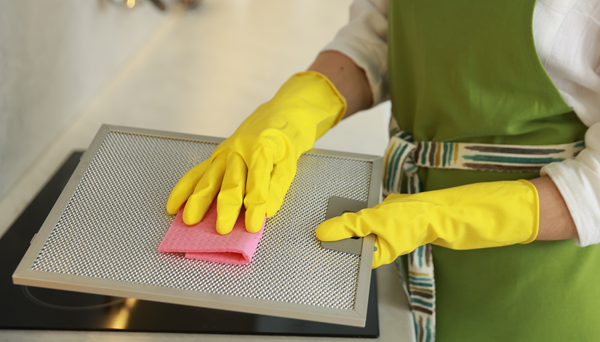
Range hoods collect airborne grease every time food is fried, sautéed, or cooked with oil. If that film remains in place, dust sticks to it and the residue becomes harder to remove. Cleaning greasy range hoods regularly keeps the visible surfaces easier to maintain and prevents filters from becoming heavily coated with old cooking residue.
Begin With the Areas That Collect the Most Grease
Turn the hood and cooking surface off and allow everything to cool completely. Look underneath the hood, around the filter, along exposed edges, and near control buttons. These areas commonly collect splashes and airborne residue.
Before applying a cleaner, check the manufacturer’s care instructions. Stainless steel, painted metal, glass, and specialty finishes may require different products.
Routine kitchen maintenance notes can help keep small jobs from becoming major cleaning sessions. A quick wipe after messy cooking is much easier than removing months of hardened buildup.
Work From Loose Dirt to Sticky Residue
Remove loose dust and crumbs before wet cleaning. Otherwise, they can smear into the grease and make the surface messier.
Apply a cleaner suitable for the hood’s finish to a cloth rather than spraying heavily into switches, seams, lights, or electrical openings.
Give Grease Time to Soften
Old grease usually responds better to contact time than aggressive scrubbing. A warm, damp cloth with an appropriate degreasing solution can soften residue before wiping.
Avoid immediately reaching for abrasive pads. Scratching a visible finish creates a permanent problem while solving a temporary cleaning one.
Ideas found in broader home care articles may suggest numerous household mixtures, but compatibility matters more than novelty. Never combine cleaning chemicals unless the product labels specifically indicate that doing so is safe.
| Area | Main Problem | Cleaning Approach |
|---|---|---|
| Outer hood | Greasy fingerprints | Gentle surface cleaning |
| Underside | Cooking film | Degrease and wipe |
| Metal filter | Trapped grease | Clean per manufacturer |
| Controls | Grease around edges | Lightly damp cloth |
Clean the Filter According to Its Type
Filters deserve special attention because their purpose is to capture material moving through the hood. Some metal filters can be washed, while other filter types may require replacement rather than soaking.
Remove the filter only according to the appliance instructions. If it’s washable, use the cleaning method recommended for that model and allow it to dry fully before reinstalling.
General household cleaning references can provide useful reminders, but your hood manual is the better source for determining whether a particular filter belongs in a dishwasher, sink, or replacement schedule.
Never operate the hood with components incorrectly installed.
Prevent the Next Layer From Hardening
Frequent light cleaning is easier than occasional heavy degreasing. After cooking oily foods, wait until the surfaces are safe to touch and wipe obvious splatter before it dries.
Use the hood while cooking whenever appropriate for the appliance. Good ventilation helps capture cooking vapors before they spread across nearby cabinets and walls.
Pay attention to the area directly above the stove as well. Grease that reaches backsplash seams, cabinet undersides, or decorative trim can become increasingly difficult to remove if ignored.
Common Cleaning Mistakes to Avoid
More scrubbing isn’t always better. Rough pads, strong chemicals, and sharp scraping tools can damage coatings, scratch stainless steel, cloud plastic parts, or remove printed control markings.
Another mistake is soaking electrical sections or spraying cleaner directly into openings. Moisture should stay away from wiring and controls.
Don’t assume every filter is washable simply because it can be removed. Disposable or specialty filters may need replacement. If the hood has damaged wiring, a nonworking fan, unusual burning odors, or another electrical issue, cleaning isn’t the appropriate repair.
Frequently Asked Questions
How often should a greasy range hood be cleaned?
Cleaning frequency depends on how often and how heavily you cook. Inspect visible surfaces and filters regularly. Frequent frying usually creates residue faster than occasional low-grease cooking, so adjust the schedule to what you actually see.
Can I use dish soap on range hood grease?
A mild dishwashing solution may be suitable for some washable surfaces and filters, but finish and filter materials differ. Check the appliance instructions before using any cleaner, especially on coated, decorative, or specialty components.
Why does grease become harder to remove over time?
Cooking residue can remain sticky and collect dust and additional layers of oil. Repeated exposure to warmth can make neglected buildup increasingly stubborn, which is why regular light cleaning generally requires less effort.
Keep the Job Small
The easiest range hood to clean is the one that never develops a thick layer of old residue. Wipe fresh splashes, inspect the filter, and use products appropriate for the appliance finish. A few minutes of routine attention can save a long scrubbing session later while keeping the cooking area noticeably cleaner.
Related Posts

Best Living Room Styles for Melbourne Apartments

4 Signs You Need to Contact a Locksmith