
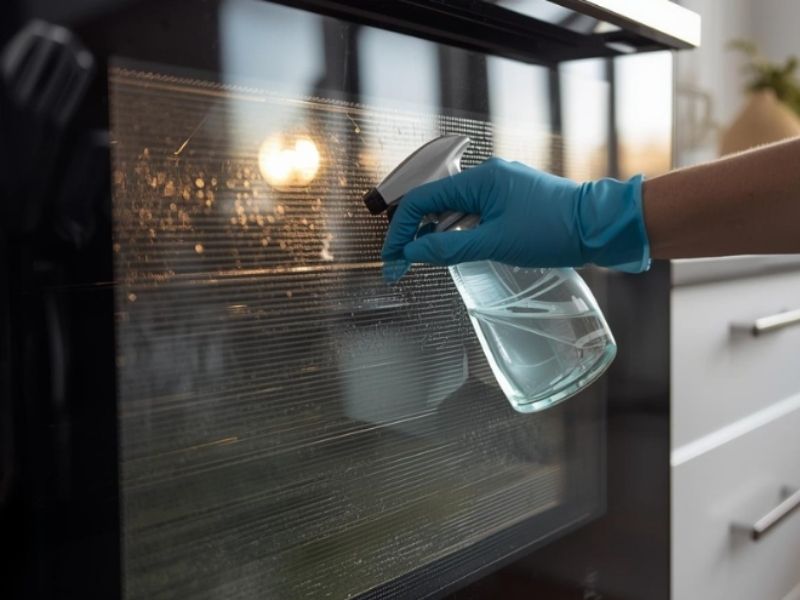
Dirty oven glass usually develops gradually as grease droplets, food residue, and cooking vapors repeatedly heat against the door. Eventually, the brown film becomes difficult to see through. Restoring visibility doesn’t always require aggressive scrubbing. Softening baked-on residue first can reduce the amount of pressure needed and protect the glass from careless scratching.
Let the Oven Cool Completely First
Never start cleaning a hot oven door. Heat increases burn risk, and rapidly cooling hot glass with water may expose it to unnecessary thermal stress.
Turn the oven off and wait until the door and surrounding surfaces are fully cool. Check the manufacturer’s care instructions as well, particularly if the appliance has coated glass, removable panels, or a specific cleaning restriction.
Start With the Least Aggressive Cleaning Method
Loose grease may come away with warm water, dish soap, and a soft cloth or nonabrasive sponge. Give the solution time to sit rather than immediately attacking the surface with force.
Homeowners browsing everyday home-care reading may find numerous cleaning mixtures, but starting gently is sensible because oven doors vary by manufacturer and finish. Repeated light passes are often preferable to using a harsh abrasive that could leave permanent marks.
| Glass Condition | Cleaning Approach | Main Caution |
|---|---|---|
| Light greasy film | Warm soapy water | Use soft materials |
| Baked residue | Soften before wiping | Avoid hard scraping |
| Stubborn patches | Approved cleaner | Follow label directions |
| Dirt between panes | Check door design | Don’t dismantle blindly |
Give Baked-On Deposits Time to Soften
Heavy brown residue is difficult because repeated heating has hardened it. Moisture and dwell time can make removal easier.
Depending on the manufacturer’s guidance, a suitable nonabrasive cleaner or mild cleaning paste may help loosen deposits. Organized cleaning topics can provide general household ideas, but avoid assuming every popular internet cleaning trick is safe for every oven surface.
After the residue softens, wipe it away gently and repeat where necessary. Trying to remove everything with one aggressive pass often creates more work and increases the chance of damaging surrounding finishes.
Pay Attention to the Door Edges and Seals
Food and grease can collect around the border of the oven window. Clean accessible edges carefully without soaking electrical components, hinges, vents, or door seals.
Don’t aggressively scrub or pull at the gasket. Its job is to help the oven retain heat properly, and damage can affect how the appliance operates. People gathering practical household resources should still treat the appliance manual as the final reference for model-specific cleaning and disassembly instructions.
Why Cleaning Harder Can Make Things Worse
Heavy scrubbing feels logical when residue looks severe, but force isn’t always the answer. Abrasive powders, rough pads, metal tools, and inappropriate chemicals may scratch glass, damage coatings, or mark nearby trim.
Another mistake is assuming stains between the glass panes can be reached by forcing liquid through vents. That may create a larger problem. If contamination sits inside a multi-pane door, check the manufacturer’s instructions or consider appliance service rather than improvising disassembly.
Frequently Asked Questions
Can I clean oven glass with a regular kitchen sponge?
A soft, nonabrasive sponge may be suitable for many ovens, but abrasive scrubber surfaces can scratch some finishes. Check the appliance instructions before using anything rough.
Why does my oven window become brown so quickly?
Cooking grease, splatters, steam, and food particles can settle on the glass and become increasingly baked on during later heating cycles. Regular light cleaning helps prevent thick buildup.
How often should oven glass be cleaned?
There isn’t one schedule for every household. Wiping visible spills after the oven has safely cooled can prevent repeated heating from turning fresh residue into harder deposits.
Clean Earlier and Use Less Force
The easiest oven glass to restore is glass that never develops a thick baked layer. Allow the appliance to cool, soften residue, use appropriate nonabrasive materials, and repeat gentle cleaning when necessary. A few minutes of regular maintenance usually requires less effort than trying to remove months of hardened cooking residue in one exhausting session.
Related Posts

Weak Online Privacy – Protect Data With Better Settings

Consumer Contract Problems – Read Fine Print Before Signing