
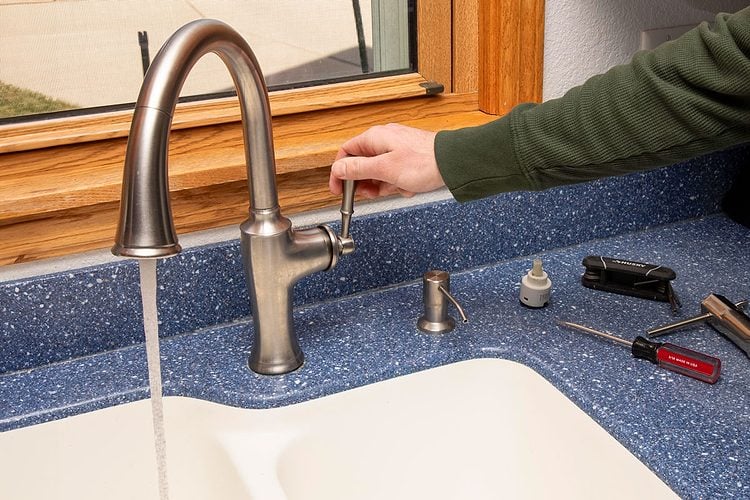
Dripping kitchen faucets are more than an irritating background sound. A persistent drip can waste water, leave mineral deposits around the fixture, and signal that an internal seal or component is wearing out. Many minor leaks can be addressed by identifying where the water is escaping before replacing parts or calling for repair.
Identify Exactly Where the Faucet Leaks
Watch the faucet while everything is turned off. Water dripping from the spout often points to an internal valve, cartridge, washer, or sealing problem. Moisture around the faucet base may have a different cause.
Dry the fixture completely and check again after several minutes. This makes slow leaks easier to locate.
Also inspect beneath the sink. A leak from a supply connection or hose shouldn’t be confused with a dripping spout.
Shut Off the Water Before Taking Anything Apart
If you’re planning a basic repair, find the hot and cold shutoff valves beneath the sink first. Close them and test the faucet before removing handles or internal components.
General kitchen maintenance guidance can be useful when building a routine for checking fixtures, sinks, cabinets, and other high-use areas before small problems become more disruptive.
Keep a towel nearby because a small amount of residual water may remain in the faucet after the valves are closed.
Protect Small Parts
Cover the drain before disassembly. Screws, clips, and small fittings can disappear quickly if they fall into an open sink drain.
Take a quick photo after removing each major piece if the faucet design is unfamiliar. It gives you a visual reference during reassembly.
| Leak Location | Possible Issue | First Check |
|---|---|---|
| Spout | Worn internal seal | Cartridge or washer |
| Handle | Damaged O-ring | Handle assembly |
| Base | Failed gasket | Base connection |
| Under sink | Loose fitting | Supply connections |
Match Replacement Parts to the Faucet
Faucets don’t all use the same internal mechanism. Cartridge, ball, ceramic-disc, and compression designs require different parts and repair methods.
Store receipts, model information, or product manuals with other household maintenance records so replacement components are easier to identify later.
If you remove a cartridge or washer, bringing the old component to a hardware store can reduce guesswork. A part that looks nearly identical may still fit incorrectly.
Clean the Area Before Reassembly
Mineral buildup can interfere with seals and make parts difficult to seat correctly. Gently clean accessible surfaces while the faucet is apart, following the fixture manufacturer’s guidance.
The appearance of the surrounding sink and backsplash also makes leaks easier to notice. Ideas from wall and surface design references can be useful when choosing finishes that are simple to wipe down and inspect.
Once everything is reassembled, reopen the shutoff valves slowly and check both above and below the sink.
Common Faucet Repair Mistakes
One common mistake is tightening every connection as hard as possible. Excess force can damage threads, crack components, or distort seals.
Another is replacing parts before identifying the faucet model. Randomly swapping washers or cartridges can turn a simple repair into repeated disassembly. If the fixture is corroded, the shutoff valves don’t work, or water continues leaking from an unclear location, professional help may be the more practical option.
Frequently Asked Questions
Why does my kitchen faucet drip after I turn it off?
An internal sealing component may no longer be closing completely. The exact cause depends on the faucet design and may involve a cartridge, washer, valve seat, or related part.
Can a dripping faucet fix itself?
Persistent mechanical leaks usually don’t disappear permanently on their own. A drip may temporarily change as parts shift, but identifying and correcting the underlying problem is more dependable.
Should I replace the whole faucet instead of repairing it?
Repair often makes sense when the fixture is otherwise in good condition and replacement parts are readily available. Severe corrosion, repeated failures, or unavailable components may make replacement more practical.
Fix the Source Instead of Chasing the Drip
Start with diagnosis rather than immediately buying parts. Determine where the leak begins, shut off the water, identify the faucet mechanism, and replace only the component that actually needs attention.
Dripping kitchen faucets are easier to manage when you work methodically. If the leak involves damaged plumbing, unreliable shutoff valves, or an uncertain connection beneath the sink, bring in a qualified plumber.
Related Posts

Best Living Room Styles for Melbourne Apartments
4 Signs You Need to Contact a Locksmith