
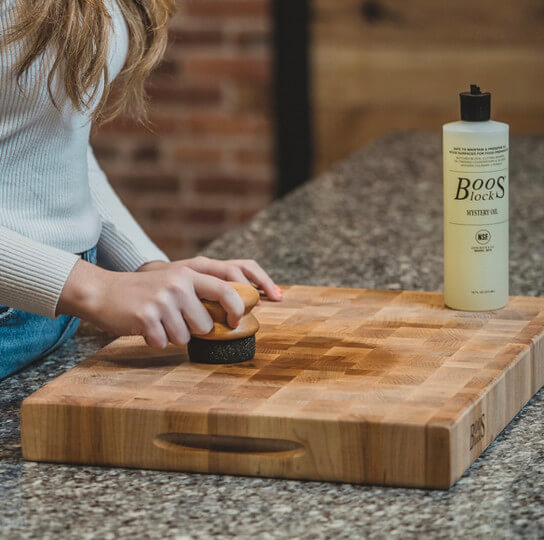
A cutting board can remain discolored or hold food odors even after ordinary washing. The right cleaning method depends heavily on whether the board is wood, bamboo, plastic, composite, or another material.
Start gently. Aggressive soaking, harsh scrubbing, or using the wrong cleaner can damage the board without solving the underlying problem.
Identify the Board Material First
Wood and plastic shouldn’t automatically receive identical treatment. Wooden boards can absorb moisture and may warp or split if left submerged, while many plastic boards tolerate more intensive washing.
Before experimenting with methods collected from general household reading, check any care instructions supplied by the manufacturer. A finish, adhesive, or specialty material may have cleaning limits that aren’t obvious from appearance alone.
Wash Away Fresh Food Residue
Remove scraps promptly and wash the surface using warm water and dish soap. Scrub areas around knife marks where food residue can become trapped.
Rinse thoroughly and dry the board rather than leaving it sitting in water.
Work on Odors Separately From Stains
A discoloration may remain after odor disappears, and an odor can remain even when the surface looks clean. Treating them as separate problems helps avoid unnecessary scrubbing.
Household tips found through independent lifestyle articles may suggest many remedies, but begin with mild options compatible with the board material. Baking soda made into a gentle paste with water can help with some surface odors and marks.
| Problem | First Approach | Avoid |
|---|---|---|
| Fresh food residue | Dish soap and washing | Long delays |
| Surface odor | Gentle cleaning paste | Masking with fragrance |
| Light discoloration | Mild repeated cleaning | Aggressive abrasion |
| Deep grooves | Inspect condition | Assuming cleaning fixes damage |
Dry the Board Completely
Moisture control is especially important for wood and bamboo. After washing, wipe away excess water and allow air to reach both sides rather than leaving one wet face pressed flat against the counter.
Advice across broader home-care resources can vary considerably, so material-specific instructions should take priority over one-size-fits-all cleaning tricks.
Store It Where Air Can Circulate
A board placed into a closed cabinet while still damp may develop unpleasant smells. Standing it upright until fully dry often improves airflow.
Avoid putting a wooden board in a dishwasher unless its manufacturer specifically says the board is dishwasher safe. Heat and prolonged water exposure can cause some wooden boards to warp or separate.
Know When a Surface Mark Is Only Cosmetic
Some foods leave pigment behind even when the board has been properly washed. A faint tomato, berry, herb, or spice stain does not automatically mean the surface is dirty.
Repeated harsh treatment can create more damage than the original discoloration. Deep sanding, strong chemicals, or abrasive tools may roughen the surface and create additional places for moisture and residue to collect.
Common Cleaning Mistakes to Avoid
Leaving a board soaking in a sink is one of the easiest ways to damage moisture-sensitive materials. Another mistake is mixing cleaning products in hopes that a stronger combination will work faster.
Don’t mix household chemicals unless a product specifically instructs you to do so. If a board has deep cracks, severe warping, loose sections, persistent contamination concerns, or grooves that are difficult to clean, replacement may be more sensible than increasingly aggressive cleaning.
Frequently Asked Questions
Can baking soda remove cutting-board odors?
It can help with some surface odors, especially when used as a mild paste followed by thorough rinsing. Results depend on the material and how deeply the odor has penetrated.
Why does my cutting board still look stained after washing?
Food pigments can leave cosmetic discoloration even after residue has been removed. Color alone doesn’t always indicate poor cleaning, although persistent roughness, residue, or damaged grooves deserve closer inspection.
When should a cutting board be replaced?
Consider replacement when the board is deeply cracked, badly warped, separating, or covered with grooves that are difficult to clean properly. Manufacturer guidance can also help determine whether damage is acceptable.
Clean Gently Before Escalating
Start with ordinary washing, identify whether odor or discoloration is the main problem, and use only material-appropriate methods. Give the board time to dry completely before storage. If cleaning requires increasingly aggressive treatment because the surface is badly damaged, replacing the board may be the more practical solution.
Related Posts

Best Living Room Styles for Melbourne Apartments
4 Signs You Need to Contact a Locksmith