
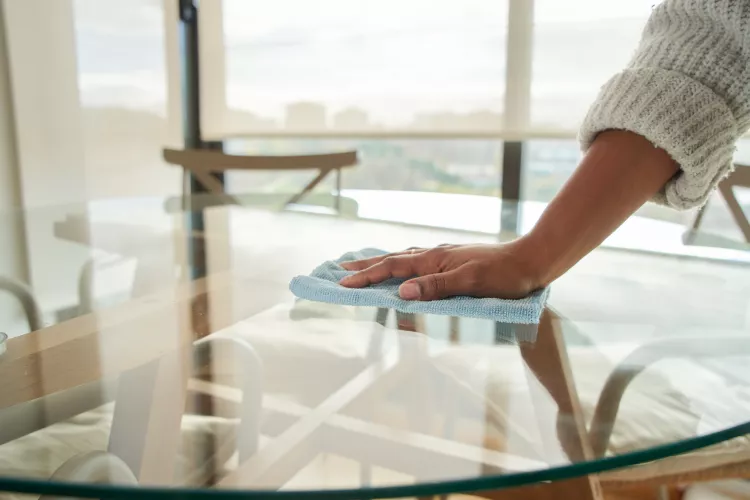
Cloudy kitchen glass usually comes from grease, mineral residue, detergent film, or repeated wiping with products that leave something behind. Getting the shine back doesn’t require aggressive scrubbing. The better approach is identifying the type of buildup, using a mild cleaner, and drying the glass before new streaks can form.
Start With the Right Cleaning Setup
Gather clean microfiber cloths, warm water, mild dish soap, and a separate dry cloth. If mineral deposits are suspected, diluted white vinegar can be useful on many ordinary glass surfaces.
Never mix cleaning chemicals unless the product labels explicitly say they can be combined. In particular, household cleaners shouldn’t be randomly mixed in an attempt to make them stronger.
People browsing everyday home guidance may find many cleaning tricks, but begin with the mildest method that can remove the residue.
Work Out What Is Making the Glass Cloudy
Greasy film often feels slightly slick and appears worse under angled light. Hard-water deposits tend to look chalkier and may remain after ordinary soap-and-water cleaning.
A hazy drinking glass can also be permanently etched rather than dirty. Cleaning won’t restore material that has actually been damaged.
Clean in a Simple Order
A repeatable process prevents you from adding fresh residue while trying to remove the old film.
- Remove crumbs, dust, or loose material.
- Wash greasy glass with warm water and a small amount of dish soap.
- Rinse away the soap completely.
- Treat stubborn mineral film separately if needed.
- Dry immediately with a clean, lint-free cloth.
General home care references can be useful for developing cleaning routines, but more product isn’t automatically better. Excess detergent is one of the easiest ways to leave a new cloudy layer.
| Cloudiness | Likely Cause | First Approach |
|---|---|---|
| Oily haze | Cooking grease | Mild dish soap |
| White spots | Mineral residue | Diluted vinegar |
| Fine streaks | Dirty cloth | Fresh microfiber |
| Permanent dullness | Possible etching | Cleaning may not fix it |
Finish the Surface Without Creating Streaks
Once the buildup is gone, the drying step determines how polished the surface looks. Use a fresh microfiber cloth rather than the same damp cloth used for washing.
Wipe methodically so you can tell which areas have already been finished. People may encounter general cleaning discussions while comparing techniques, but the most useful test is simple: inspect the glass from several angles under good light.
For windows or glass cabinet doors, working away from strong direct sun can help because cleaner won’t dry as quickly on the surface.
Common Mistakes That Keep Glass Looking Cloudy
Adding more cleaner to stubborn haze can make the problem worse. If the glass feels greasy after drying, rinse it again rather than applying another heavy layer of product.
Dirty cloths are another frequent problem. Fabric softener, kitchen grease, or leftover cleaner trapped in a towel can transfer straight back to the glass.
Avoid abrasive pads unless the glass manufacturer specifically allows them. Scratches may be more difficult to correct than the original cloudiness. If a vinegar treatment makes no difference after repeated attempts, consider whether the glass is etched rather than coated with removable minerals.
Frequently Asked Questions
Why do my glasses look cloudy after the dishwasher?
Detergent residue, hard-water minerals, or permanent etching can all produce a cloudy appearance. Try hand washing and rinsing one glass carefully; if the haze remains unchanged, the surface may be damaged rather than dirty.
Can vinegar remove streaks from kitchen glass?
Diluted vinegar can help with some mineral residue, but it isn’t necessary for every cleaning job. Greasy film often responds better to mild dish soap followed by thorough rinsing and drying.
Why does microfiber sometimes leave streaks?
The cloth may already contain grease, detergent, fabric softener, or too much moisture. Switch to a clean, dry microfiber cloth and buff the surface again.
Let the Final Rinse Do More Work
Shiny glass usually comes from removing residue completely, not layering stronger cleaners over it. Match the method to the type of haze, use small amounts of cleaning solution, rinse thoroughly, and finish with a clean dry cloth. If the surface stays dull despite proper cleaning, permanent etching or wear may be the real issue.
Related Posts

Best Living Room Styles for Melbourne Apartments

4 Signs You Need to Contact a Locksmith