
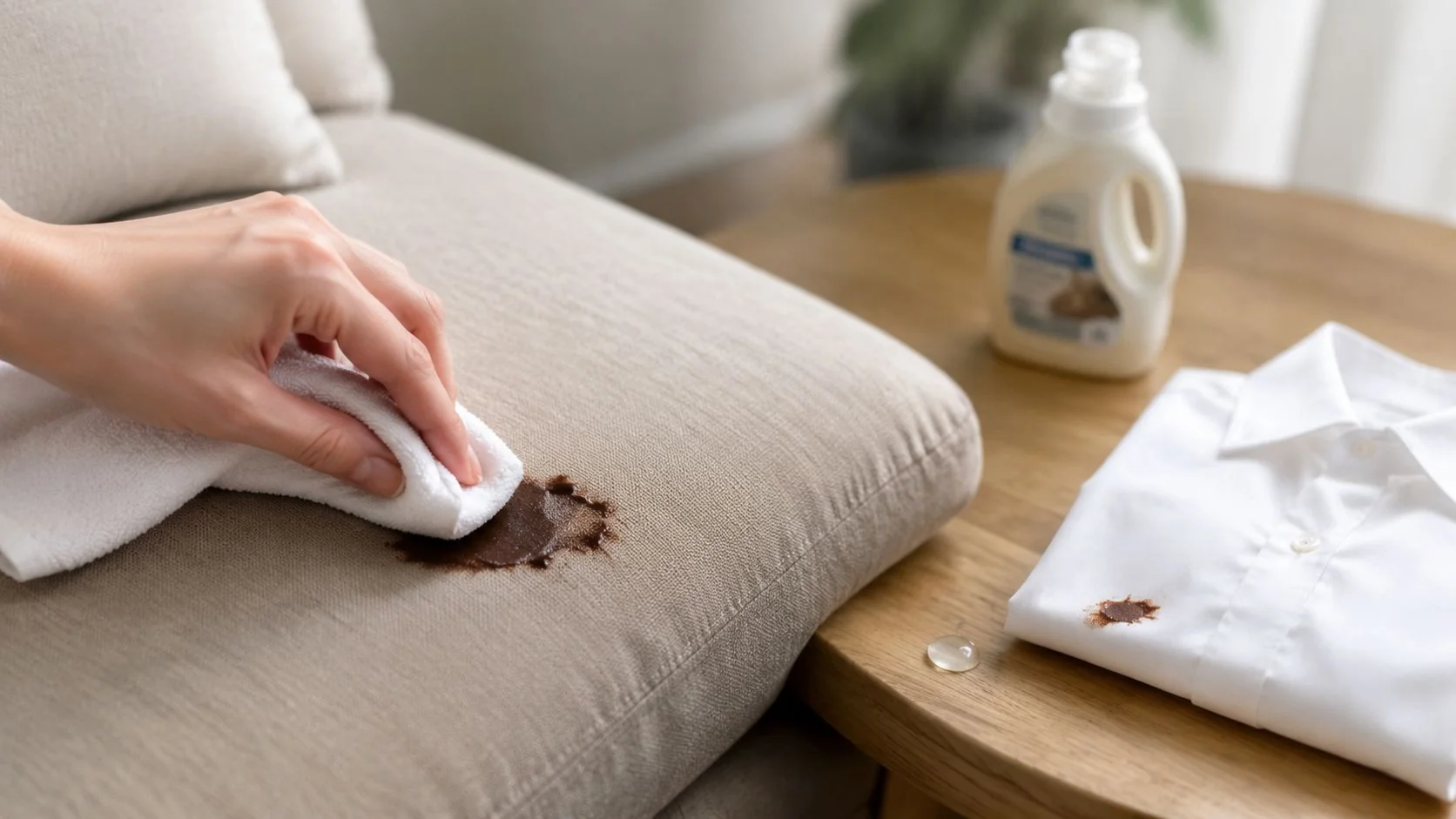
A stained sofa fabric can often be improved, but aggressive cleaning may turn a small mark into a larger problem. The safest approach is to identify what spilled, check the sofa’s care instructions, remove loose material, and work gradually. Rubbing, soaking, or experimenting with several cleaners at once can spread discoloration or damage the fabric.
Check the Care Label Before Cleaning
Start with the manufacturer’s upholstery instructions whenever they are available. Some fabrics tolerate water-based cleaning, while others require solvent-based products or professional treatment.
Don’t assume two similar-looking sofas can be cleaned the same way. Fiber type, dye stability, backing material, and protective finishes can change how the upholstery reacts.
Test Before Treating the Visible Stain
Apply any suitable cleaning method to a hidden area first. People comparing household techniques through a general topic collection may find many different recommendations, but a spot test shows how your particular upholstery responds.
Wait for the test area to dry before judging the result. Wet fabric can temporarily look darker.
Blot Fresh Spills Instead of Scrubbing
For a fresh liquid spill, use a clean absorbent cloth to blot gently. Work from the outer edge toward the center so the stain is less likely to expand.
Avoid pressing so hard that liquid moves deeper into the cushion. General shared article ideas may describe various cleaning approaches, but controlled blotting remains safer than vigorous rubbing for many common spills.
| Stain Situation | Avoid | Better First Move |
|---|---|---|
| Fresh liquid | Hard rubbing | Blot gently |
| Thick spill | Smearing material | Lift excess first |
| Unknown stain | Mixing cleaners | Identify it first |
| Delicate fabric | Heavy soaking | Use minimal moisture |
Match the Method to the Stain
Different marks respond differently. Water-based beverages, oily food, ink, mud, and pet accidents shouldn’t automatically receive the same treatment.
Remove solids carefully with a spoon or dull edge before introducing moisture. For oily marks, excessive water may accomplish little and can enlarge the visible area. An in-depth reading hub can help you compare general cleaning concepts, but the sofa manufacturer’s instructions should control which products are appropriate.
Use Small Amounts of Cleaner
More cleaner isn’t necessarily more effective. Saturating fabric can create water rings, slow drying, or move residue into the cushion underneath.
Apply the smallest practical amount and repeat carefully if needed instead of soaking the area during the first attempt.
Where Sofa Cleaning Commonly Goes Wrong
Scrubbing is one of the biggest mistakes because friction can spread pigment and disturb the fabric surface. Heat is another risk. Trying to dry a stain quickly with strong direct heat may affect fibers, finishes, or color.
Mixing cleaning products is also unnecessary and can produce unpredictable results. Use one appropriate method at a time, and rinse or neutralize it only as directed by the upholstery or product instructions.
Know When Home Cleaning Should Stop
If color begins transferring onto your cloth, the fabric develops a ring, the texture changes, or the stain continues expanding, stop adding cleaner. Repeated attempts can make professional restoration more difficult.
Delicate, antique, specialty, or expensive upholstery may justify professional cleaning earlier. The same applies when you’re uncertain about the fabric or the original spill.
Frequently Asked Questions
Can dish soap remove stains from a sofa?
A mild diluted solution may be suitable for some water-cleanable upholstery, but not every fabric tolerates it. Check the care instructions and test an inconspicuous area before applying any cleaning solution to a visible section.
Why does my sofa have a water ring after cleaning?
A ring can appear when moisture, soil, or cleaning residue dries unevenly around the treated area. Avoid repeatedly soaking the spot. Follow the upholstery instructions or consider professional treatment if the ring persists.
Is it better to clean a sofa stain immediately?
Fresh spills are often easier to manage because they haven’t had as much time to spread or dry. Remove excess material and blot promptly, but don’t skip the fabric-care instructions in the rush to clean.
Treat the Stain Without Creating a Second Problem
Successful sofa cleaning is often about restraint. Check the fabric instructions, remove excess material, test your method, and work from the stain’s edge inward. Stop if color or texture begins changing. A careful first attempt protects both the appearance of the upholstery and your chances of removing the mark successfully.
Related Posts

Best Living Room Styles for Melbourne Apartments

4 Signs You Need to Contact a Locksmith