
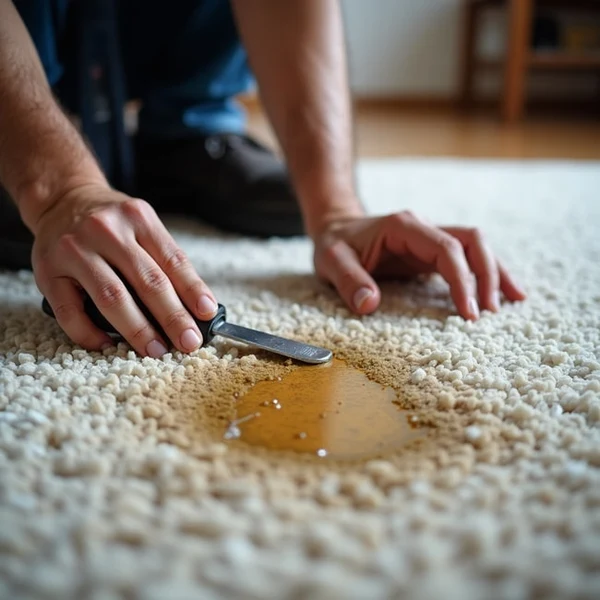
A stubborn carpet stain can become worse when aggressive scrubbing spreads the spill or damages the fibers. Successful stain removal usually depends on identifying the stain, lifting material gently, and avoiding excess moisture. Treating the mark gradually is safer than immediately reaching for the strongest cleaner available.
Before applying any cleaning product, test it on a hidden area.
Start by Removing What You Can
For fresh liquid spills, blot with a clean absorbent cloth. Press downward and replace the cloth as it becomes wet rather than rubbing from side to side.
Solid material should be lifted carefully with a spoon or dull-edged tool. Removing surface residue first prevents you from pushing it deeper into the carpet.
Work From the Outside In
Start near the outer edge of the stain and gradually move toward the center. This reduces the chance of spreading the mark across a larger area.
Use light pressure. Scrubbing can untwist or roughen fibers, leaving visible damage even after the stain disappears.
Match the Cleaning Method to the Stain
Different stains respond to different methods. Water-soluble spills may respond to mild cleaning solutions, while greasy residues often need a product specifically designed to break down oils.
General cleaning reference material can provide broad household ideas, but always check your carpet manufacturer’s instructions before using unfamiliar chemicals.
Apply cleaner to a cloth when practical rather than flooding the carpet directly. Too much liquid can soak through the backing and make drying more difficult.
Control Moisture During Cleaning
More water doesn’t necessarily mean more cleaning power. Excess moisture may spread residue, leave detergent behind, or penetrate the carpet pad.
Household maintenance resource directories can expose homeowners to many cleaning techniques, yet moisture control remains one of the most useful practical rules.
| Problem | Risky Response | Safer Approach |
|---|---|---|
| Fresh liquid spill | Vigorous rubbing | Blot repeatedly |
| Greasy mark | Flooding with water | Use suitable cleaner |
| Unknown stain | Strong chemical first | Test hidden area |
| Soap residue | Adding more detergent | Rinse lightly and blot |
After treating the stain, blot with a clean damp cloth if the product instructions call for rinsing, then remove as much moisture as possible.
Dry the Area Thoroughly
Place dry towels over the treated area and press firmly to absorb remaining moisture. Air movement from a fan can help the carpet dry faster.
Homeowners browsing practical home care notes may find many stain-removal suggestions, but drying deserves as much attention as cleaning. A stain that looks gone while wet may reappear as moisture pulls residue upward.
Keep foot traffic away from the area until it is fully dry.
Check for Stain Wicking
Sometimes discoloration disappears during cleaning and returns later. This can happen when residue deeper in the carpet migrates upward during drying.
If that occurs, repeat gentle blotting rather than immediately applying a stronger chemical.
Common Cleaning Mistakes to Avoid
Mixing cleaning chemicals is a poor shortcut. Products can react unpredictably, damage carpet materials, produce unpleasant fumes, or leave residues that attract new dirt.
Another mistake is repeatedly scrubbing the same area. Permanent fiber distortion may become more noticeable than the original stain.
Older, valuable, wool, specialty, or manufacturer-sensitive carpeting may require professional treatment. The safest technique depends partly on the carpet itself, not only on the substance that caused the stain.
Frequently Asked Questions
Should you scrub a carpet stain?
Usually not. Scrubbing may spread the stain and damage the carpet’s surface texture. Blotting with controlled pressure removes moisture and residue while reducing unnecessary friction.
Why does a carpet stain come back after cleaning?
Residue can remain deeper in the carpet or backing and move upward as the area dries. This process is often called wicking and may require additional gentle blotting.
When should a carpet cleaner be professionally treated?
Consider professional help for large stains, deeply soaked spills, delicate fibers, valuable carpeting, persistent odors, or marks that remain after appropriate home cleaning.
Remove the Stain Without Creating Another Problem
Successful carpet cleaning depends on restraint. Remove loose material, blot instead of scrubbing, use a suitable cleaner, keep moisture controlled, and allow the area to dry completely. If repeated treatment starts changing the carpet’s texture or color, stop. Protecting the fibers matters more than forcing one stubborn mark out at any cost.