Apartment living has become the default for a large share of Melbourne renters and buyers, and living rooms have shrunk to match. Finding the best furniture store in Melbourne can make it easier to choose furniture that suits a compact apartment while balancing style, comfort, and available floor space. Recent reporting from Domain shows some apartments with a single bedroom now sit close to 45 square metres in total, which leaves the living area carrying most of the daily use in a fraction of the space a house would offer.
That shift has pushed a handful of living room styles to the front of the conversation for Melbourne apartments, since each one solves the same core problem: making a compact room feel considered rather than cramped. The right style shapes everything from colour palette and material to the scale of a coffee table or an armchair, or a full range of living room furniture in Dandenong, so understanding the options first is worth the time.
Living Room Styles at a Glance
The table below summarises how each style suits a different kind of Melbourne apartment before the sections that follow go into more detail.
| Style | Best For | Key Materials and Colours | Signature Pieces |
| Scandinavian | Rooms that need more natural light | Pale wood, white walls, wool, and linen | Light timber coffee table, low armchair |
| Japandi | Renters wanting a calm, quiet space | Natural wood, stone, muted neutrals | Low TV unit, woven ottoman |
| Mid-Century Modern | Apartments with existing character features | Walnut and teak tones, tan leather, brass | Sculptural armchair, tables with tapered legs |
| Contemporary Minimalist | Newer builds with an open layout | Monochrome palette, glass, matte finishes | Storage ottoman, sleek hall table |
| Industrial | Converted warehouse apartments | Exposed brick tones, black metal, raw timber | Metal-framed hall table, dark leather seating |
Scandinavian Minimalism
Scandinavian style suits small Melbourne apartments because it works with light rather than square metres. The look relies on a palette of white walls, pale timber and soft neutral textiles, a combination credited with bouncing daylight around a room and making it read larger than it is.
A coffee table in Thomastown paired with low, simple seating keeps sightlines open across the room, which matters most when the living area doubles as a walkway. Wool throws and one plant placed in a good spot round out the look without adding visual weight.
Japandi Calm
Where Scandinavian style leans on brightness, Japandi asks for a quieter, more tactile version of the same restraint. The style blends Japanese minimalism with Scandinavian warmth, a pairing that emerged as designers combined wabi-sabi imperfection with Nordic cosiness. In a living room, that translates into fewer pieces sitting lower to the ground, which keeps a small apartment from feeling stacked with furniture.
A wide TV unit with a low profile works with this style far better than a tall cabinet, since it keeps the eye moving along the horizontal rather than up a wall. Natural fibres and one ceramic object finish the room without adding clutter.
Mid-Century Modern
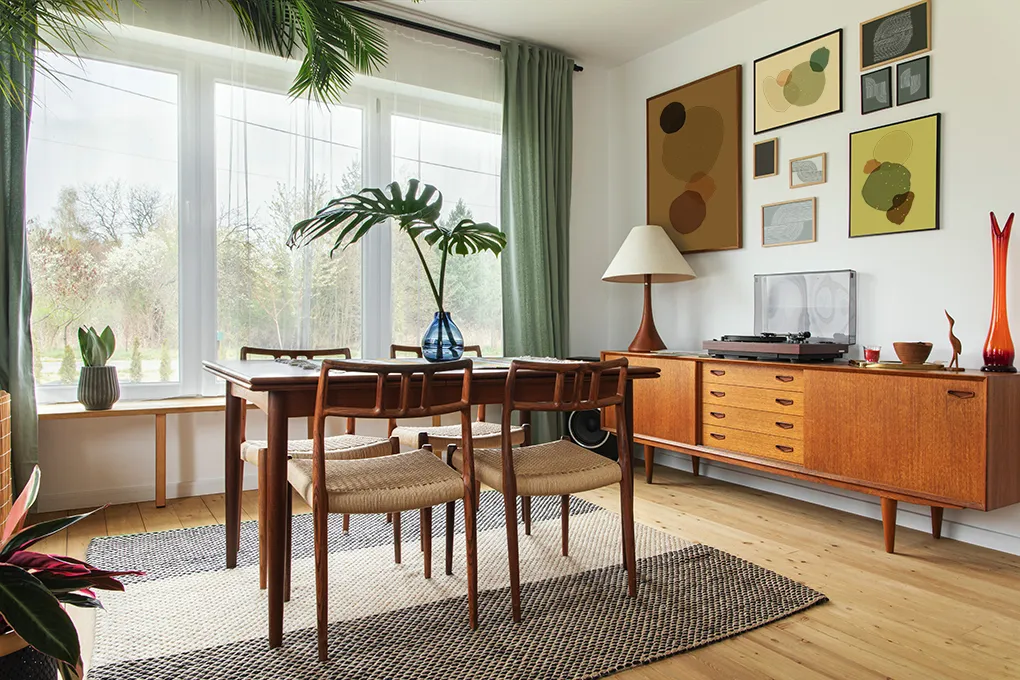
Many older Melbourne apartments, particularly those scattered through Brunswick, Northcote and Elwood, already carry the proportions this style was designed for. Mid-century furniture favours tapered legs, warm timber tones such as walnut and teak, and a small number of statement pieces rather than a room full of matching items.
For shoppers looking for an armchair in Melbourne, a sculptural design in tan leather or bouclé fabric can do most of the visual work in a room like this, making it worth considering as a focal piece rather than choosing an armchair purely for function. Brass accents and a low sideboard round out a look appropriate to the era without crowding a compact floor plan.
Contemporary Minimalist
For newer builds with sharper architectural lines, a contemporary approach usually reads better than either style above. These living rooms lean on a monochrome colour palette, matte finishes, and furniture chosen for its function as much as its form.
A storage ottoman earns its place twice over here, working as extra seating for guests and as a covered container that hides blankets, remotes, or magazines that would otherwise sit out on a shelf. Keeping the palette to two or three tones, then letting texture do the remaining work through a rug or a cushion, stops the room from feeling stark.
Industrial Warehouse Style
Not every Melbourne apartment fits neatly into a modern build, and the city’s converted warehouse stock calls for a different approach entirely. Melbourne’s warehouse conversions grew out of a wave of artists and architects repurposing old industrial buildings in suburbs such as Richmond and Fitzroy, a trend that has continued to shape the city’s inner suburbs ever since.
Exposed brick, tall ceilings and oversized windows already do most of the styling work in these apartments, so furniture only needs to support that character rather than compete with it. A hall table in blackened metal or aged timber, placed near the entry, carries the material story from the architecture into the living space, while dark leather seating and raw timber shelving fill out the rest of the room.
Practical Styling Tips for Any Apartment Living Room
Regardless of which style ends up guiding the room, a handful of practical habits apply across all of them. Scale matters more than colour in a small apartment living room, since an oversized piece will dominate a compact floor plan no matter how well it matches the palette. A lamp table placed beside a chair replaces the need for a floor lamp taking up its own patch of floor space, and it does the job in a fraction of the footprint. Measuring the room before shopping, then comparing those measurements against product dimensions rather than photos, prevents most of the sizing mistakes that show up after delivery.
Colour and texture deserve the same discipline as scale. A room built around two or three tones reads as considered even when the furniture inside it comes from several different collections, while too many competing colours can make even a well-proportioned room feel busy.
Natural light also plays a larger role in a small space than in a house, so pale surfaces and a mirror positioned to reflect a window often do more for a room than an extra lamp ever could. Shoppers working through this process from scratch can browse living room furniture scaled for apartments in one place rather than piecing a look together from several different sources.
Where to See These Styles in Person
Photographs only convey style so far, since fabric, timber tone, and true scale are easier to judge in person. Melbourne shoppers can compare finishes and test scale firsthand at Furn House, with showrooms located across the city, including Dandenong, Hoppers Crossing, and Thomastown, where sitting on a piece for a few minutes reveals far more than a listing photo ever will.
Furn House stocks pieces across each style covered above, from Scandinavian coffee tables to industrial hall tables, which makes it a practical stop for comparing more than one direction before deciding.
Final Thoughts
None of these styles demands a full renovation or a large budget, since each one is built around choices in colour, material and furniture scale rather than structural change. A Melbourne apartment’s mid-century-fitted floor space can carry Scandinavian brightness, Japandi calm, mid-century character, contemporary restraint or industrial edge equally well, provided the pieces chosen match the proportions of the room rather than the size of the photograph they were seen in.
Testing that fit in person, at a showroom or otherwise, remains the most reliable step before committing to any single direction.
Frequently Asked Questions
What is the best living room style for a small Melbourne apartment?
Scandinavian and Japandi styles tend to suit the smallest floor plans best, since both rely on pale colours, low furniture and minimal clutter to keep a compact room feeling open.
What is the difference between Scandinavian and Japandi style?
Scandinavian design leans toward bright whites and pale wood, while Japandi mixes that same restraint with darker, more textured Japanese materials such as stone, clay and raw timber for a calmer, less stark result.
Does mid-century modern furniture work in a rental apartment?
Yes. A single statement piece, such as a sculptural armchair, brings the style into a room without requiring any changes to walls, flooring, or fixtures, which makes it a practical choice for renters.
How do I make an industrial-style living room feel warm rather than cold?
Balance hard surfaces such as brick and metal with soft textiles, warm lighting and timber tones, since industrial style relies on that contrast rather than on hard materials alone.
Which piece of furniture saves the most floor space in a small living room?
A storage ottoman tends to deliver the most value per square metre, since it works as seating, a footrest and hidden storage without needing a separate piece for each function.
Related Posts
4 Signs You Need to Contact a Locksmith

Townhouse Buying Problems – Compare Ownership Costs Before Closing