
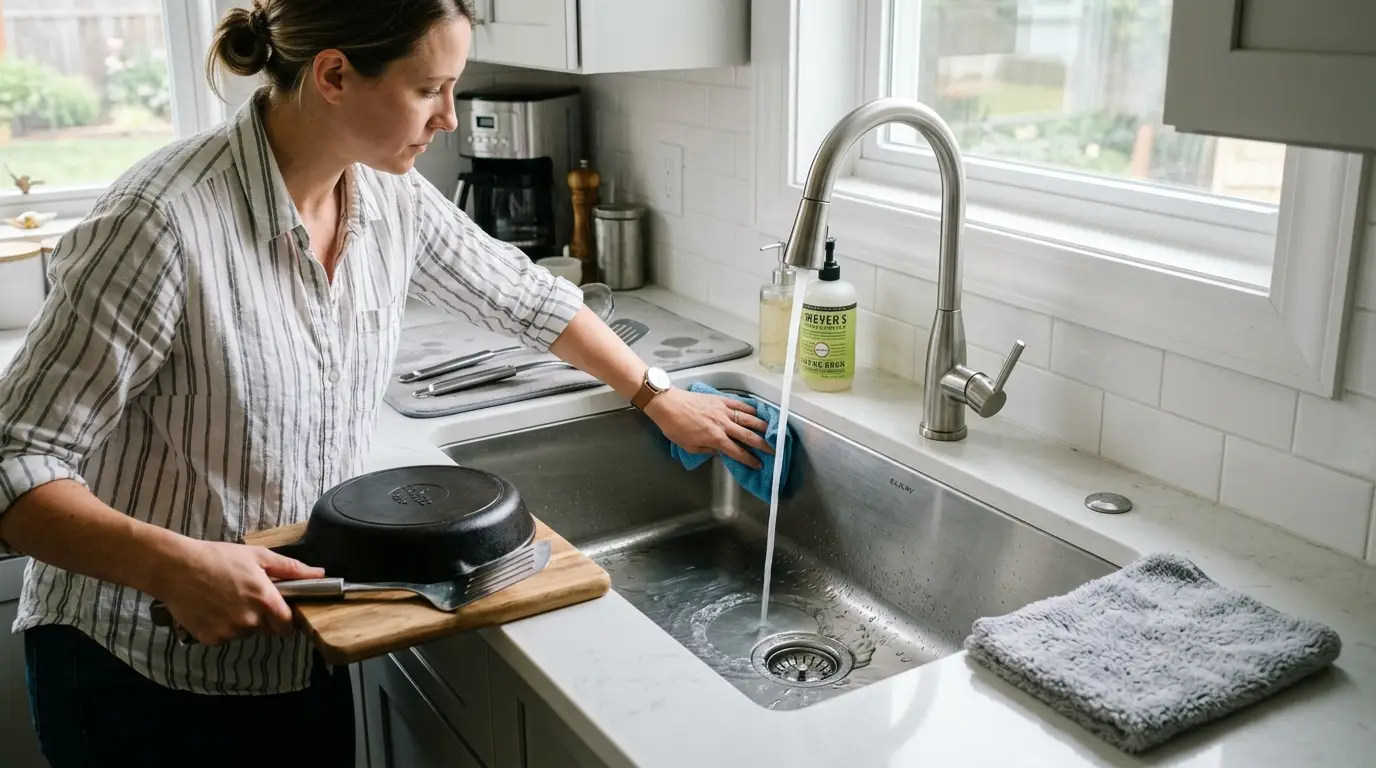
Scrubbing harder isn’t always the safest answer to stubborn sink stains. Mineral deposits, soap residue, food marks, discoloration, and surface buildup can look similar while responding differently to cleaning. The safest approach is to identify the sink material first, begin with mild methods, and increase cleaning strength gradually instead of reaching immediately for abrasive pads.
Identify the Surface Before Scrubbing
Stainless steel, porcelain, ceramic, composite, natural stone, and coated sinks don’t all tolerate the same products. A cleaner that works well on one material can dull or discolor another.
Check manufacturer care instructions when they’re available. Household information from practical topic collections can provide general ideas, but the sink maker’s guidance should take priority when a finish has special restrictions.
Start With the Least Aggressive Method
Warm water, mild dish soap, and a soft microfiber cloth can remove more buildup than expected. Wash loose dirt away first so grit isn’t dragged across the surface during scrubbing.
Give the cleaner a little contact time rather than applying excessive pressure immediately.
Loosen Buildup Instead of Grinding It Away
Hard-water deposits often need softening more than scrubbing. Soap residue may also release after soaking with an appropriate surface-safe cleaner.
Avoid steel wool and highly abrasive scouring tools unless the sink manufacturer specifically permits them. Even tiny scratches can change how light reflects from a polished surface and may make future grime easier to notice.
For broader home-care inspiration, gentle household reading can be useful, but any cleaning suggestion should still be checked against your sink’s actual material.
| Stain Type | Gentle First Step | Avoid Initially |
|---|---|---|
| Soap residue | Warm water and dish soap | Harsh scouring |
| Food discoloration | Mild surface-safe cleaner | Metal tools |
| Mineral buildup | Material-approved treatment | Aggressive scraping |
| Greasy film | Degreasing dish soap | Rough pads |
Work in Small Sections
Trying to clean the entire sink aggressively at once makes it difficult to tell which method is working. Test a small, less visible area first, especially when using a new cleaner.
Use light circular or material-appropriate strokes and inspect the surface between passes. If a stain is fading, continue gradually. If the finish begins changing, stop and rinse.
Never mix household cleaning chemicals casually. Combining incompatible products can create dangerous fumes or reactions, so follow product labels and keep cleaning methods simple.
Rinse and Dry the Surface Properly
Cleaning residue left behind can create new streaks that look like stains. Rinse thoroughly with clean water after using any cleaning product.
Drying matters too. A soft cloth removes remaining droplets before minerals in the water can settle again. Readers exploring fresh home-maintenance ideas may focus on stain removal, yet regular drying can reduce how often some visible deposits return.
Where Sink Cleaning Commonly Goes Wrong
The biggest mistake is treating every mark as something that can be scrubbed away. Some discoloration may come from damaged finish, corrosion, etching, worn coating, or staining below a porous surface.
More pressure won’t repair those problems. It may make them worse. If repeated gentle cleaning produces no improvement, reconsider what you’re seeing before escalating to stronger chemicals or abrasives. Sometimes the problem is surface damage rather than removable dirt.
Frequently Asked Questions
Can baking soda scratch a sink?
Its suitability depends on the sink material and finish. Although commonly used as a household cleaner, abrasive action can affect some surfaces. Check manufacturer recommendations and test cautiously before using it extensively.
Why does my sink still look cloudy after cleaning?
Mineral residue, cleaner film, surface wear, or incomplete rinsing can create a cloudy appearance. Rinse thoroughly, dry with a clean microfiber cloth, and inspect whether the discoloration is actually part of the finish.
Is a rough scrubber safe for stainless steel?
Some abrasive tools can leave visible scratches. Use the sink manufacturer’s care guidance and begin with a soft cloth or non-scratch cleaning tool before considering anything more aggressive.
Clean Gradually, Not Aggressively
The fastest-looking cleaning method isn’t always the one that leaves the sink in the best condition. Identify the material, loosen residue with a mild suitable cleaner, use soft tools, rinse completely, and stop if the finish changes. Stubborn sink stains deserve patience because removing a mark isn’t much of a victory if the cleaning process permanently scratches the surface.
Related Posts

Best Living Room Styles for Melbourne Apartments

4 Signs You Need to Contact a Locksmith