
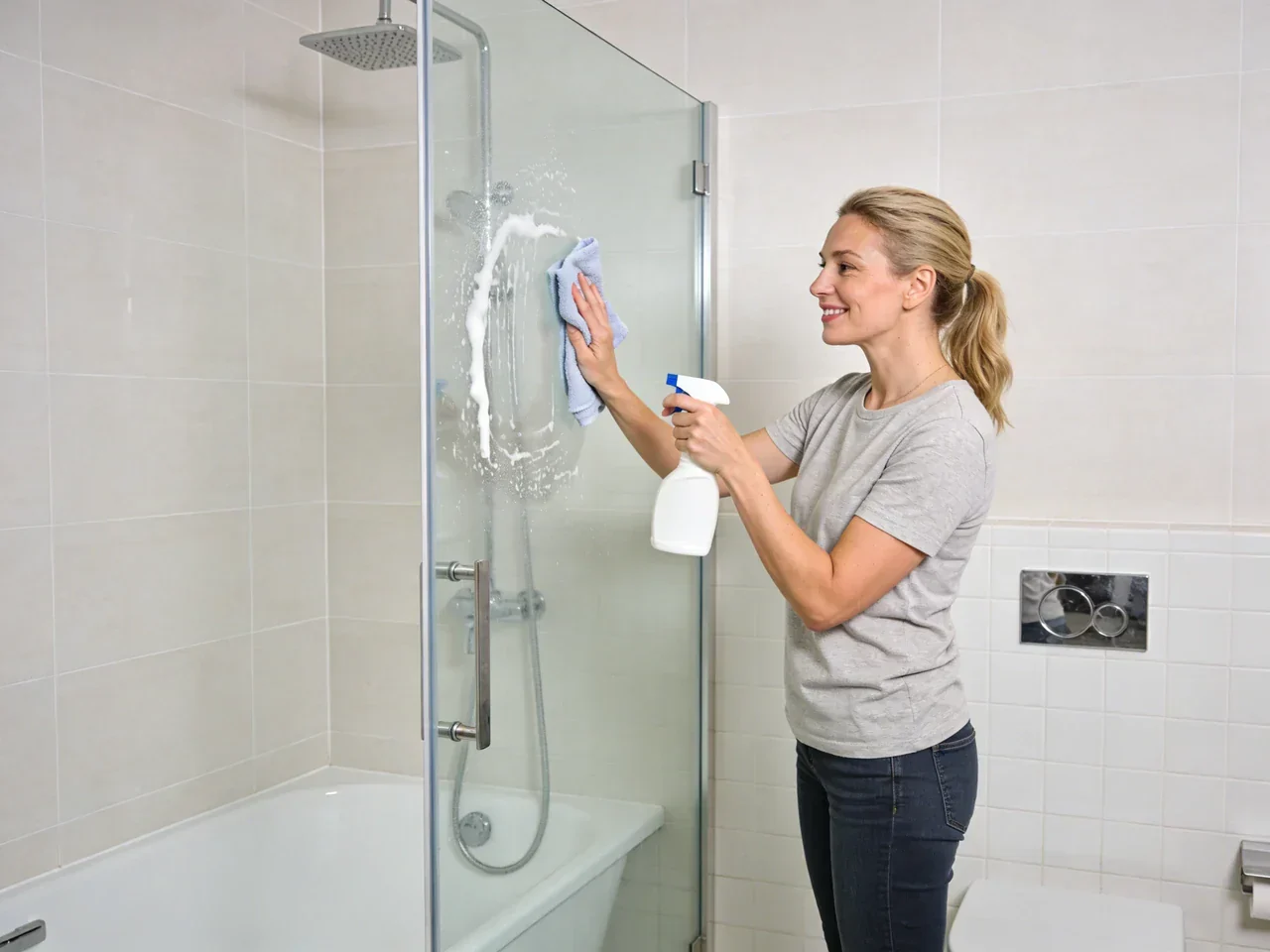
Cloudy shower glass often comes from mineral deposits left behind when water droplets evaporate. Soap residue and body-care products can mix with those minerals, creating a stubborn film that ordinary rinsing doesn’t remove. The easiest cleaning approach is to soften the buildup first, remove it without scratching the surface, then reduce how much water remains on the glass afterward.
Identify What Is Making the Glass Cloudy
Hard-water deposits often appear as pale spots, streaks, or a chalky haze. Soap film can feel slightly greasy and may become more obvious after the shower dries.
Before reaching for aggressive cleaners, check whether the surface is ordinary glass or has a special protective coating. Coated shower doors may require manufacturer-approved cleaning products.
| Appearance | Likely Cause | First Approach |
|---|---|---|
| White spots | Mineral residue | Mild acidic cleaner |
| Greasy haze | Soap/body products | Glass-safe cleaner |
| Mixed cloudy film | Minerals plus soap | Soften, then wipe |
| Scratched-looking haze | Surface damage | Avoid abrasives |
Soften Mineral Deposits Before Scrubbing
For ordinary untreated glass, diluted white vinegar is commonly used to loosen mineral buildup. Apply it to the affected area, allow brief contact time, and prevent it from immediately running away before it can work.
Wear household cleaning gloves when needed and ventilate the bathroom. Never mix vinegar or other acids with chlorine bleach. Discussions across general lifestyle media may feature many cleaning mixtures, but combining household chemicals without understanding their reactions can create unnecessary risk.
Use Gentle Mechanical Cleaning
Once deposits have softened, wipe them with a nonabrasive sponge or microfiber cloth. Repeat treatment on stubborn areas instead of immediately reaching for harsh scouring pads.
Rinse thoroughly so loosened residue doesn’t dry back onto the glass.
Remove Soap Film Without Damaging the Surface
Mineral remover may not eliminate oily bath-product residue by itself. A glass-safe bathroom cleaner can help break down soap and product film after mineral deposits have been loosened.
Cleaning recommendations found through household information coverage can vary widely, so test unfamiliar products on a small area and follow the shower-door manufacturer’s directions when available.
Pay attention to frames, seals, metal hardware, stone tile, and other nearby materials. A product tolerated by glass isn’t automatically appropriate for every surface surrounding it.
Dry the Glass Completely
After cleaning, rinse away remaining cleaner and wipe the surface dry. Drying makes leftover spots easier to see and prevents fresh tap water from immediately creating another visible layer.
A clean microfiber towel works well for final drying. Readers comparing tips through home-focused online articles may see elaborate maintenance routines, but a basic squeegee after each shower can make a major practical difference.
Removing water before it evaporates means fewer minerals remain behind.
Common Cleaning Mistakes to Avoid
More abrasion isn’t always better. Steel wool, rough scouring pads, harsh powders, and scraping tools may scratch glass, damage coatings, or mark nearby finishes.
Another mistake is assuming every cloudy surface is removable scale. Glass that has been etched, scratched, or permanently damaged may remain hazy after deposits are gone. Repeatedly attacking that surface with stronger chemicals won’t restore missing or damaged material and may make surrounding finishes worse.
Frequently Asked Questions
Can vinegar remove hard-water stains from shower glass?
Vinegar can help loosen common mineral deposits on suitable untreated glass. Check manufacturer instructions first if the door has a protective coating or if vinegar could contact sensitive stone or metal surfaces.
How often should shower glass be cleaned?
Frequency depends on water hardness and shower use. Regularly removing droplets with a squeegee can reduce buildup and may make deeper cleaning less frequent and easier.
Why is my shower glass still cloudy after cleaning?
Remaining haze may be stubborn mineral scale, soap residue, or actual surface etching. Try identifying the type of residue before repeating stronger treatments.
Prevent the Film From Building Back
Once the glass is clean, prevention is easier than repeatedly removing heavy scale. Squeegee the door after showering, allow the enclosure to dry, and address new spots before they form a thick layer. Gentle, regular maintenance generally requires less chemical exposure and less scrubbing than waiting until the entire door becomes opaque with residue.
Related Posts

Best Living Room Styles for Melbourne Apartments

4 Signs You Need to Contact a Locksmith